
READ MORE ABOUT THE 2006 COLLEGE FOOTBALL SEASON
READ MORE ABOUT THE 2007 COLLLEGE FOOTBALL SEASON
READ MORE ABOUT THE 2008 COLLEGE FOOTBALL SEASON
READ MORE ABOUT THE 2009 COLLEGE FOOTBALL SEASON
READ MORE ABOUT THE 2010 COLLEGE FOOTBALL SEASON
READ MORE ABOUT THE 2011 COLLEGE FOOTBALL SEASON
READ MORE ABOUT THE 2012 COLLEGE FOOTBALL SEASON
READ MORE ABOUT THE 2013 COLLEGE FOOTBALL SEASON
Nothing about 2006 suggested what was coming. In fact, Ohio State and Michigan spent the season ranked 1-2 in the polls. Their dominance was so presumed that even when the Buckeyes won the traditional season-ending battle, there was a considerable groundswell for the Wolverines to get a rematch in the newly created BCS National Championship Game.
Florida won the SEC and needed to see USC get upset late in the season and finally nudged ahead of Michigan to get to #2 in the polls. Even so, they were underdogs taking on Ohio State.
Not only did the Gators pull an upset, but their speed completely overwhelmed the Buckeyes. It was a 41-14 rout. And it proved to be more than a national championship. It was the start of the most dramatic consolidation of conference power in the long history of college football.
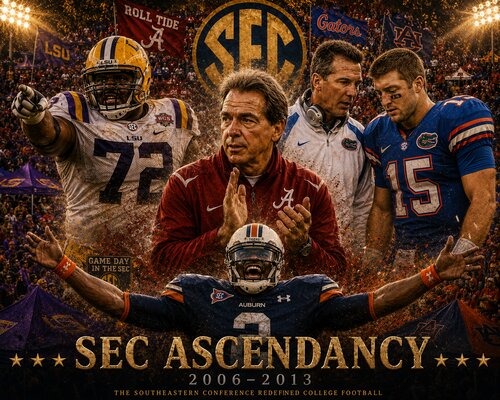
One year later it was LSU rolling past Ohio State in the championship game with ease. In 2008, Florida, this time led by Tim Tebow, returned to the top.
The SEC was ascendant. And the program that would ultimately define the era was only beginning its rise.
THE CRIMSON STANDARD
Alabama had fallen into mediocrity when Nick Saban returned to college football after a brief stint with the Miami Dolphins. Saban arrived in Tuscaloosa in 2007. One year later, he had a national contender. And by 2009, Alabama was national champs, knocking off Texas in a battle of blueblood programs. And the Tide were far from done.
In 2010, an interruption to Alabama’s championship run only reinforced SEC dominance. Cam Newton had a fantastic Heisman Trophy season for Auburn, led the Tigers on a dramatic comeback to beat the Tide, and then won the national championship.
In 2011, the SEC’s dominance was underscored by Alabama and LSU being chosen to play in the championship game, a historic showdown among conference rivals. The Tide won that game easily. One year later, they were back. This time facing Notre Dame, Alabama so overwhelmed the Irish in the trenches, it looked like the SEC was in a separate league from the rest of the nation.
Saban had three titles in four years, but it was more than that. It wasn’t just that the SEC was winning titles. It was that so many different schools got in on the fun.
THE STREAK ENDS BUT THE BEAT GOES ON
The SEC streak finally came to an end in 2013, but it was anything but easy. Auburn, after a couple years in the doldrums, pulled off a big upset of Alabama, the punctuation to a magical turnaround season and they got themselves into the championship game. Florida State had dominated opponents all year long and was a decided favorite.
In a first half oddly reminiscent of when this era began in 2006, the underdog from the SEC was dominating, taking a 21-3 lead. This time though, the favorite punched back. Jameis Winston rallied the Seminoles and in a wild finish, FSU won the title.
The sport was starting a pivot to a new era. A four-team Playoff was coming. But the SEC–particularly Alabama–would remain at the center of the college football landscape as a new rivalry began to emerge.