
The NHL had spent the previous decade expanding geographically and becoming more competitively balanced. Those changes were locked in over this four-year period, and the primary reason was a historic labor dispute in the 2004-05 season.
What made this one historic is that it resulted in the cancellation of an entire season, unprecedented in North American professional sports.
When it was over, the owners emerged triumphant, with a hard cap that further accelerated the parity trend across the league.
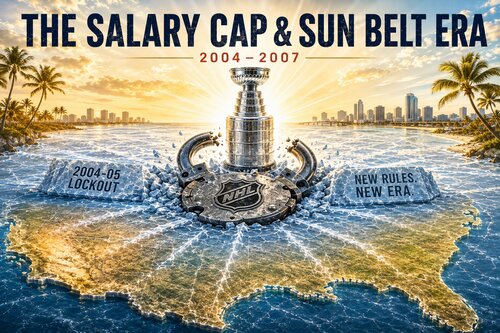
Furthermore, teams from non-traditional markets in the South and the West continued to rise. The Tampa Bay Lightning won the Stanley Cup in 2004, setting the tone for a franchise that would be consistently successful in the coming years. The Carolina Hurricanes won in 2006. And the Anaheim Mighty Ducks did it in 2007.
The NHL transformation was complete. But just because the sport had gone national didn’t mean the Old Guard from the cold-weather cities had disappeared. Traditional powers were still lurking, ready to reassert themselves—but now they would have to do it in a league transformed by expansion, parity and the salary cap.